
Artificial Intelligence (AI) was coined as the Science and Engineering of making machines intelligent. 80 years later, “Smart” machines are extensively marketed, suggesting AI has become a software that learns patterns from data to make predictions, generate content, or take autonomous actions previously required human judgement. Observers might state AI rest on hardware, secure software, governance, and human needs. As a result, no one is an AI expert, but everyone knows something about AI.
Human needs, algorithms, and data consumption
Businesses assets – data, rules, processes – are nowadays enshrined and accessed into software components. Leaders trust complex software solutions to sustain the delivery of services to the public or their customers. Modern complex software components rest on intangible, modern, and technical architecture, that embodies legal, ethical, business and human needs. Added level of complexities arises from interdependencies, integration of multiple data sources, use of cloud technologies or open-source components add new responsibilities and level of complexity.
Human needs and data both influence the algorithms and the outcomes. The challenge is to maintain accuracy and trust of the decision makers. It is easier when software components rely on deterministic algorithms are explainable, predictable and predictable. It is a lot harder when some software components are implemented instead with non-deterministic algorithms – that are unexplainable and unpredictable.
Filtering, grouping, computing some descriptive statistics or changing the status of a case is much easier to validate with data quality metrics. Predicting the next streaming movies or series is a lot harder to explain, predict and demonstrate the outcome is appropriate, without sharing training datasets, mathematical knowledge, and algorithms knowledge.
For example, reading hand written numbers is not an easy task to automate – this video explains clearly how it can be achieved. It is a classic and solved problem with machine learning – a form of AI. It raises the question whether Roman numerals would be accurately read, if a model has only been trained non-roman number numerals. Perhaps not.
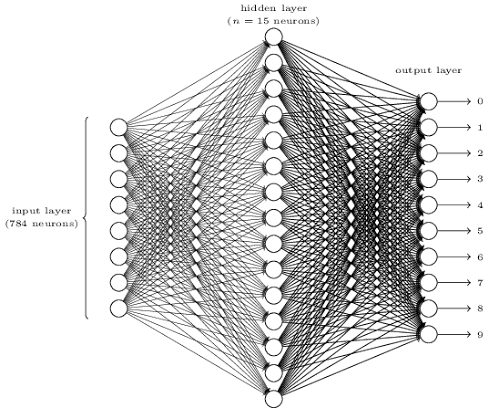
Data plays therefore a key role for AI explainability, evaluation, and maintainability of models in production. We might not be able to explore each node of a neural network – we can demonstrate its relevance for a specific use.
How could we explain accuracy and relevancy of AI models against real-world problems, without any transparency?
Secured software – high risk managements, and mitigation
Businesses assets – data, rules, processes – are nowadays enshrined and accessed into software components. Leaders trust complex software solutions to sustain the delivery legal contracts, public services, and population health, and other goals. Complex software components are built on technical architecture, that addresses legal, ethical, business and human needs. Interdependencies, integration of multiple data sources, use of cloud technologies or open-source components add new responsibilities. Interdependencies with AI or autonomous AI agents bring even more responsibilities.
Software components’ updates, configuration, or lack of patches increase vulnerabilities to cyber-attacks. Integration and data storage with inefficient encryptions, authentication and authorisation mechanisms lower prevention of data leakage. Outcome of computations can increase inference of sensitive and confidential data asset. Lack of real data and requests protocols standardisation can lead to injection attacks. Sharing software components documentations to AI models can lead to AI-led cyber-security attacks. Trusting an LLM to generate code to complete a specific query can lead to inaccurate, unreliable, and unwanted outcomes. This list is not exhaustive.
These alarming examples can become overlooked, negatively impacting the organisation – without strict data, systems, AI and security governance. Additionally, these risks continually evolve. Security delivery must, therefore, lower risks from a variety of threats :
- Lack of hardware resilience
- Increased AI-led cyber attacks and vibe coding practices,
- Impact on decision making based on misinformation
- Explore whether a non-AI solution might be possible and equally efficient
The inclusion of strict secure-by-design and secure software development practices, inclusion of explainable AI with algorithms impact on outcomes, and keeping the human in the loop can only help. Avoiding sharing with any AI technical documentation reduces sharing vital information with any AI and LLMs that drive cyber-security attacks – asking providers to do the same becomes a necessity.
The rest of the governance is leadership engagement through thorough inspection, risk management register, and key performance analysis, that drive improvements and innovation.
Multi-disciplinary teams, composed of delivery managers, data protection, cyber-security specialists, data analysts, data scientists, software and data engineers, data and AI ethicists can together mitigate many of those risks. Each specialist becomes part of a team, with unique role. AI, security, data protection, ethical use of algorithms and data, software engineering practices becomes the bridge between all those professions. Softer skills – communication, research, innovation, problem-solving – becomes the enabler.
Without hardware – no software and no AI.
Companies, governments, health organisations, and others organisations have become even more dependent to computing hardware – to support their daily activities. Consequently, increasing reliance of data centres powered by sustainable and resilient power supply. Recently, a major airport has stopped operating; a small power station stopped working. Heat waves have started negatively impacting medical equipment, stopping medical treatments and preventive scans. An Internet cable is damaged, cutting access to any Internet network activities to users – people and organisations.
Business continuity, population health, safety, national security, public services can only benefit from addressing such warmings – there is a need to adapt and address these ecological and political situations. One option is to engage with commercial teams to enables supply chain responsible, resilient to break down of power supply, military and terrorism attacks, and lower impact on climate change. Another option is to continue researching new ways to reduce, use again, and models impact of risks, if left unaddressed.
Achieving such goals is challenging. Engineers, researchers, sustainability specialists, ethicists, scientists, and legal teams can all contribute to such success. A multi-disciplinary approach relies on strong communication, innovative endeavour, and problem solving skills – informing leaders on risks mitigations that can be achieved in the immediate future to much longer term, to increase a sustainable resilience protecting their business continuity without impacting on a fragile eco-system.
Conclusion and take-aways
Conclusion
In 2026, the rise of interconnecting AI-driven software components using the past software methodologies has become obsolete. As organisations become increasingly dependent on complex software, adaptable, and autonomous systems, the illusion that “anyone is an AI expert” must be replaced with a mature recognition of collective responsibility.
Mitigating the risks of non-deterministic models, cyber vulnerabilities, and fragile physical infrastructures requires more than just innovative tools. It demands rigorous, secure-by-design architecture, proactive governance, and true multidisciplinary collaboration. It also demands keeping confidential and secret any technological documentation and away from any form of LLMs – it becomes a necessity to prevent AI-driven cyber-attacks.
By anchoring technological ambition in robust safety measures, transparent data practices, and resilient physical foundations, organisations can harness the power of AI while safeguarding business continuity, public trust, and our fragile ecosystem.

