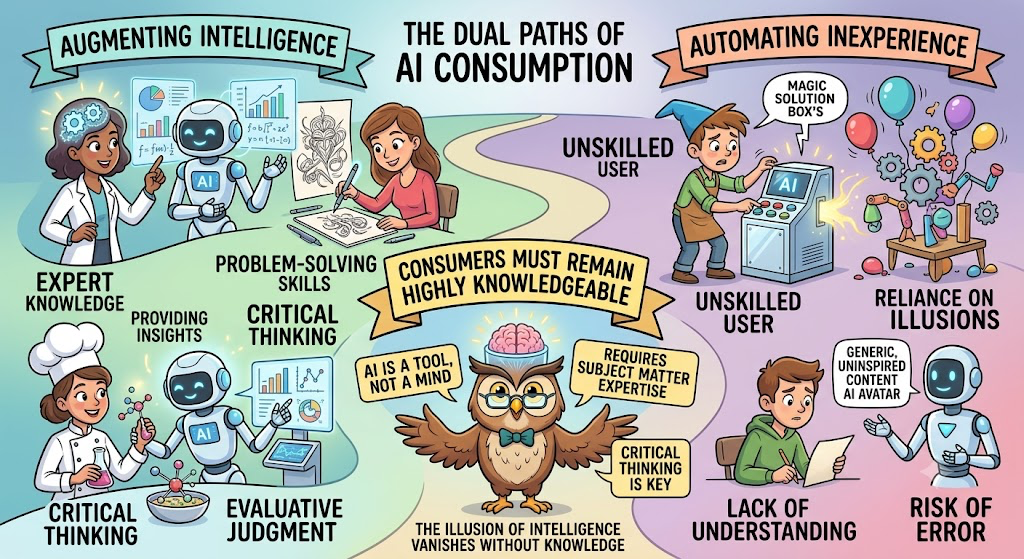
In our last post, we explored the “teabag illusion”—the dangerous trap of mistaking the convenience of out-of-the-box tools for genuine competence. We established that engaging actively and learning from mistakes brings true expertise.
Now, we are deep into 2026, AI has become an invisible layer across that is becoming harder and harder to avoid or not use at all. It is becoming challenging to search information on the web, without an LLM generating content from multimedia content findings. As result more and more tasks become even more challenging to be completed digitally without an LLM. With the raise of AI agents, it will become even harder.
Automating Inexperience: misaligning AI integration goals
AI is not deterministic – a given outcomen is completely unpredictable, and uneasily predicted by intial conditions and causes. There is a lot of room for chance or randomness. When AI is integrated mistakenly using misconceptions it is the same as a software engineering project, then organisations fails to benefits from its use.
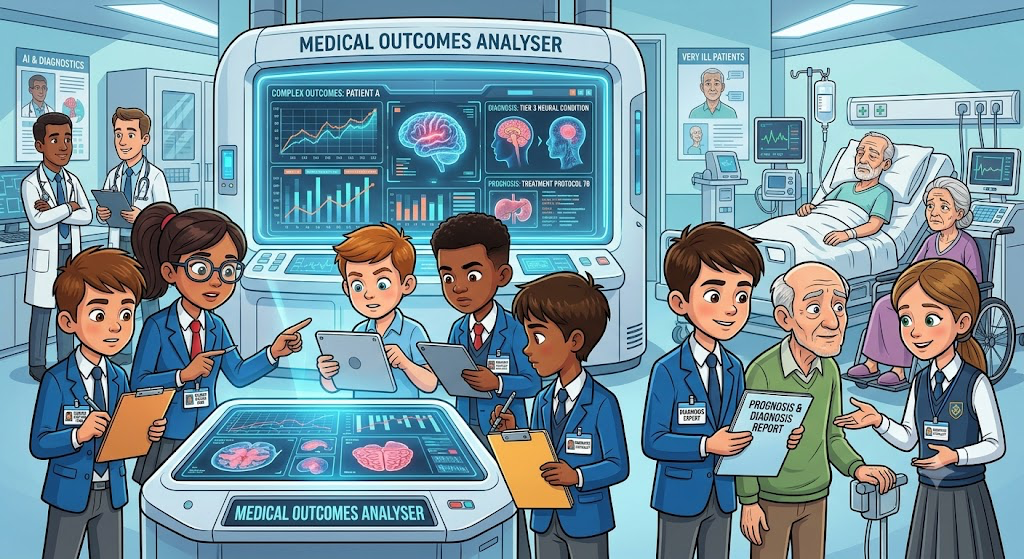
Software may integrate models and AI agents may integrate prompts developed through trial and errors. Critically assessing the situation often pinpoints to the lack of defining accuracy outcomes and what subject matter expertise is required for providing this assessment. It is a bit like providing school children with complex medical tools that have illegally been developed without expert assessment and given to the hands of non-experts.
NHS provides this guidance, making this situation impossible.
Automating Inexperience: solving mathematical problems
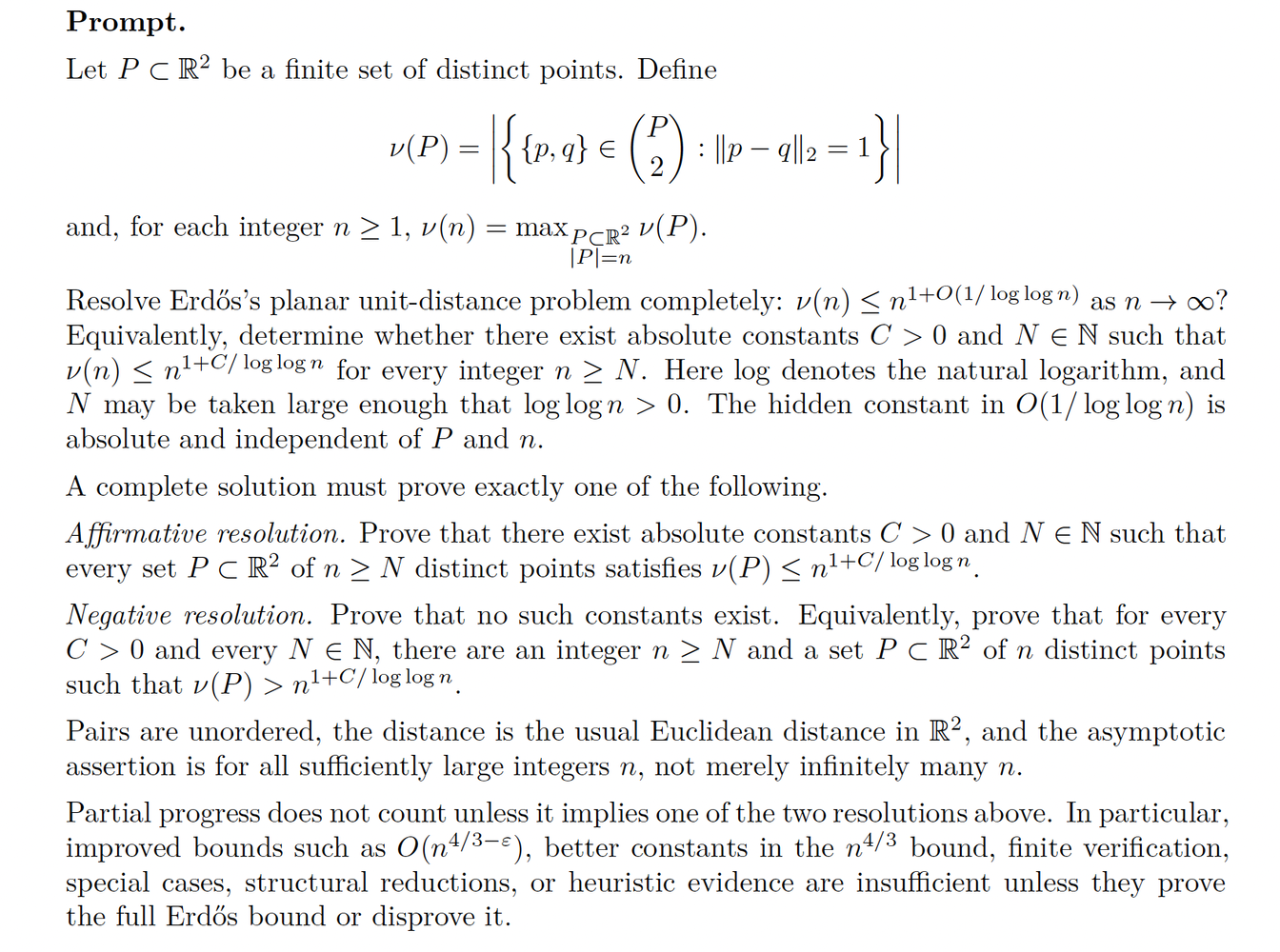
Searching the web with “openai solve math problem” provides an overview of the hype from the press, and other bloggers. Critically assessing the press coverage and the mathematical expertises brings two different views.
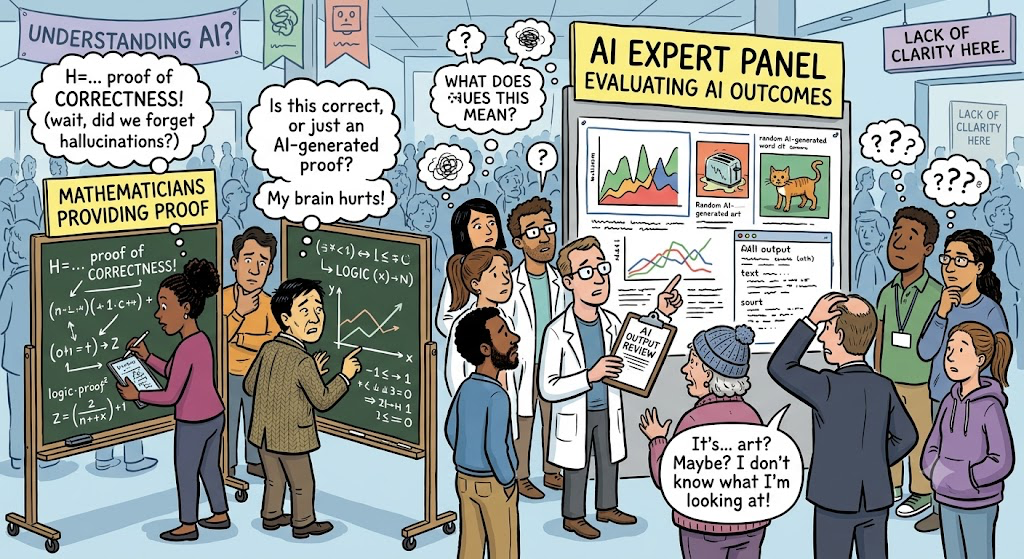
The mathematicians who deveoped the prompt for disproving a mathematical conjecture was very complex. Open AI assessed the outcomes without possibly the relevant mathematical knowledge. Instead, mathematical academics have also written their own version, as significantly improved solutions was published by human academics. The companion paper can be found here.
Augmenting Intelligence: working at pace
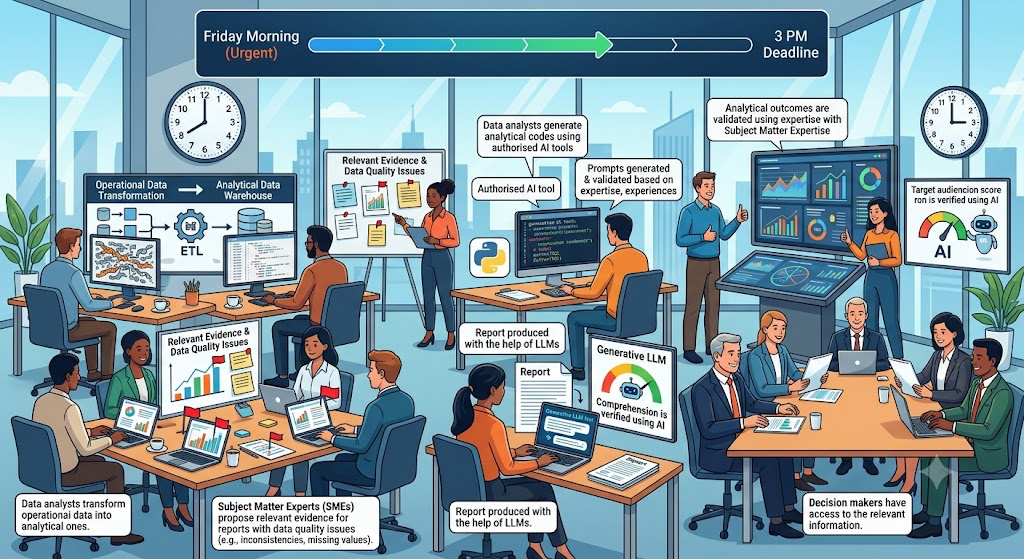
It is Friday morning – an urgent matter needs to be resolved just before the weekend. Some data needs analysed, before some recommendations needs being made before 3pm. Data analysts transform operational data into analytical ones, the subject matters experts proposes relevant evidence for their reports with data quality issues. Data analysts generats analytical codes using authorised AI tools. Prompts are generated and validated based on their expertise, experiences. Analytical outcomes are validated using their expertises with subject matter expertise. A report is produced with the help of LLMs and target audience comprehension is verified using AI. It is 3pm and decision makers have access to the relevant information.
This example can happen in 2026, when a workforce receive relevant training on responsible use of AI. Leaders have their expectations managed and keep data, technical, and subject matters expertise in the loop.
Augmenting Intelligence: design and simulation
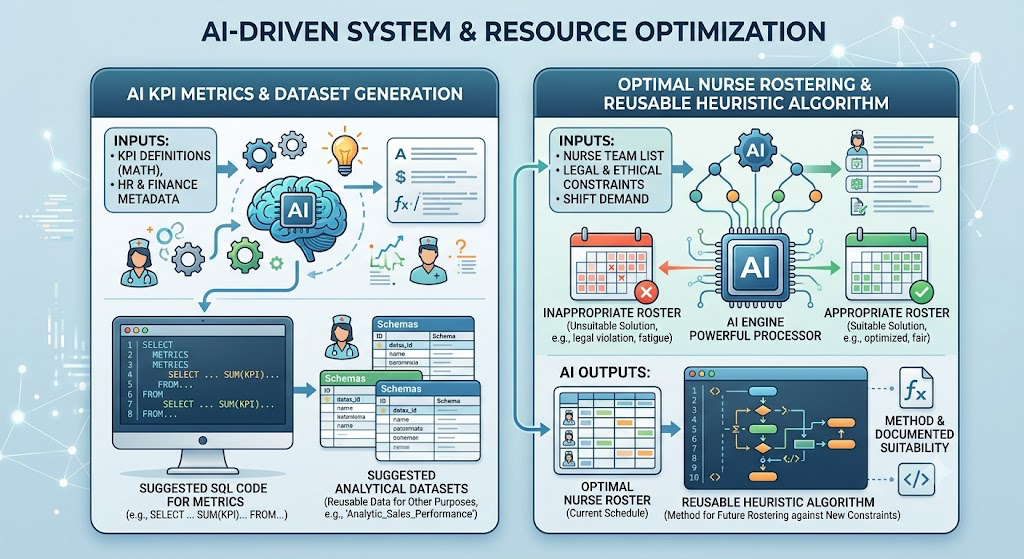
Imagine we have some well-defined mathematical definitions for key performance indicators and the metadata dictionary of an HR and finance system. AI could simulate and suggests possible SQL code to compute these performance measures. AI could also suggest analytical datasets that can be used again for other purposes.
Imagine we would like to schedule a team of nurses against some specific legal and ethical constraints. AI could search for possible combinations of employees and indicates the most optimum possible nurse rostering. Appropriate and inappropriate rosters could inform about suitable and unsuitable solutions to the decision makers. Even better, if the AI could produce an algorithm that can produce again the roster against new constraints. Then, the hospital would have the method and the roster documenting suitability.
Two A.I.s: Augmenting Intelligence or Automating Inexperiences
Newell made the hypothesis and demonstrated that all intelligent behavior could be reduced to the manipulation of symbols. Many forms of AI manipulates symbols – some of them predicts the next symbols based on pre-trained models and some other rely on more random processes.
In 2026, AI has become invisibly integrated and sold as technology that can resolve many problems. On top of AI readiness, impact on the environment, and cyber-security – organisations needs to ensure the right level of expertise is developed, recruited, and kept. AI rely on subject matter expertise – AI and non-AI.
AI consumers may either Augment their Intelligence or Automate their Inexperience. Consuming AI requires problem solving, critical thinking, evaluative and analytical skills on top of subject matters expertise. AI consumers must remain highly knowledgeable, otherwise the AI cannot bring an illusion of intelligence.